Light makes photography. Embrace light. Admire it. Love it. But above all, know light. Know it for all you are worth, and you will know the key to photography.

— George Eastman.


Friday, February 24, 2012

Kodak and Digital Photography circa 1994

The The recent press coverage and various discussions about Kodak’s bankruptcy filing last month caused me to start thinking about the major role Kodak has played in my photographic life. From my first camera, a Kodak Brownie Hawkeye, through Kodachrome, Ektachrome and Tri-X PAN to the APS-C format sensor in my Nikon D7000s, Kodak has always been a major presence. The comments that Kodak invented digital still photography made me think specifically about my early days with digital photography.


My experience with digital photography began in 1994 with the Kodak Photo CD. Photo CD was a system of digitizing and storing up to 100 photos in a proprietary format at 5 different resolutions up to 6.3 megapixels. Photo CD Pro Master discs had 25 photos in 6 resolutions up to 25 megapixels. At the time, for Photo CD, I was shooting Kodak Royal Gold at ASA 100 and 400 with Nikon F3s and prime NIKKOR lenses. I would have my film processed by Kodak and would receive negatives, prints and a Photo CD with the photos for about $1 a frame. This was a big deal in 1994; digital photography in 1994 was expensive. The alternatives were more expensive drum scans of negatives and transparencies or the Kodak DCS 460. The DCS 460 was a Kodak digital back mated to a Nikon N90s body; it had 6 megapixels and retailed for $28,500 (about $43,500 in today’s dollars).
Kodak DCS 460

The Photo CD route to digital photography had its own costs too. Processing digital photos in Photoshop required very robust hardware. I used a custom built Windows based PC spec’d as follows:
·   Processor/BIOS/Bus:             
o   AMD 386DX-40 - this was actually faster than an Intel 486DX-33
o   AMD 80387DX Coprocessor
o   AMI Bios
o   EISA Bus

·   Memory
o   32 MB – 4 MB SIMMS in 8 Slots

·   SCSI Drive System
o   Adaptec AHA-1742A EISA SCSI-2 Card in Enhanced Mode
o   250 MB HDD - System Partition
o   1 GB Toshiba HDD - Applications, Fonts, etc.
o   1 GB Toshiba HDD - Data
o   SyQuest SQ3270 - 270 MB
o   Iomega Zip Drive - 100 MB
o   NEC CD-ROM
o   HP ScanJet IIC
o   2 Sony 1.44 Floppy Drives

·   Video
o   Diamond Stealth PRO Video Card with 4 MB RAM
o   NEC 21 in. flat/square monitor, .28 dot pitch , 75 Hz refresh rate

The operating system was Windows for Workgroups 3.11 over MS-DOS 6.22. My applications were Aldus PageMaker 4.0, Adobe Photoshop 3.0, Adobe Illustrator 4.0, CorelDraw 3.0, Adobe Type Manager for Windows 2.0, Microsoft Excel for Windows 4.0 and Microsoft Word for Windows 2.0.

Workflow with Photo CD images was to open the Base image, 512 x 768 pixels or about a 1.2 MB file, turn on a macro recorder and then start editing the base image. The macro recorder captured mouse clicks and keystrokes, saving them for later. At the end of the day, you would close all your applications and restart your computer, ensuring a clean machine with fully available resources. Then you would launch Photoshop, open the 16 Base image, 2048 x 3072 pixels or an 18 MB file, launch the macro and go home for the night. If all went well, you had an edited 16 base image in the morning. With a resolution of 96 dpi, the 16 Base image had what Kodak described as a “poster” size of 32 x 21 inches. At 300 dpi this yielded an image approximately 6 ¾ x 10 ¼ inches.

Another cost of digital photography in those early years was time. Since final image editing was automated and occurred overnight, this didn’t really count. The major time investment in those days was waiting for screen redraws. Forget about “previews” as we think of them today. Even with a fast processor, coprocessor and lots of memory, video was the big bottleneck. Even with video acceleration, it took seemingly forever for the image to redraw on the screen. The only solution to this was the fastest video card you could afford with as much video memory as possible.

One final word about memory; it is true today that Windows loves memory, it was even more so in 1994. By contemporary standards, the 32 MB of RAM that I had was outrageous. This amount of memory contributed to my system being fast and stable; I did not experience the “Blue Screen of Death” that so many complained about. Having 32 MB of RAM installed allowed me to run Photoshop and PageMaker at the same time and still have a print job running in the background. It was an unusual, but necessary, luxury to be afforded so much memory. By comparison, today I am running an Intel Core i7-3960X with 32 GB of RAM installed for which I paid considerably less than that 386-DX40 from 1994. Thank-you Gordon Moore.


Steven L. Sasson inventor of the
world's first digital still camera,
.01 megapixels.

Friday, January 13, 2012

Technology—Photoshop

When I started shooting professionally, the big technological innovation was TTL metering. WOW! I shot film for over 35 years and because of my process and the way I was trained, I spent as much time in the darkroom as I did behind the camera.
I've heard a lot of discussion about the "evils" of Photoshop recently. Personally, there is nothing I can do in Photoshop that couldn't be done in a darkroom. Photoshop does make it a lot easier to do. Is digital the same as film? No. But then Tri-X Pan wasn't Kodachrome either. Different media, different processes, different results--but great results were produced with both. I admit, I was a late-comer to digital cameras—my F3s had to be pried from my fingers. I love my Nikon DSLRs. I have had to change my processes, but everything I learned is still relevent—focal length, ISO, aperature, shutter speed, depth of field, zone system, etc.
I think some people get lost in thinking of it as only a qualitative question. My 16-year old son is fond of asking things like, "which is better, a Ferrari or a Taurus?" It really isn't a fair comparison of values or qualities, it is a comparison of differences. Digital is different from film, but that doesn't make it any better or worse.
I still shoot both, I still shoot the same way, and my back-end processes are completely different. Obviously the results are different, but one media is no more or less art than the other. As Trent said, "they are all just tools to me."

Saturday, June 18, 2011

Color

 Green Doors at St. Paul's
Nikon D60 w/ Nikkor 10-24mm f/3.5-4.5 lens
10mm, 1/125 sec, f/8, ISO 400 Manual exposure


Brake Wheel and Railroad Cars
Nikon D60 w/ Nikkor 55-300mm f/4.5-5.6 lens
116mm, 1/200 sec, f/4.8, ISO 200 Auto exposure


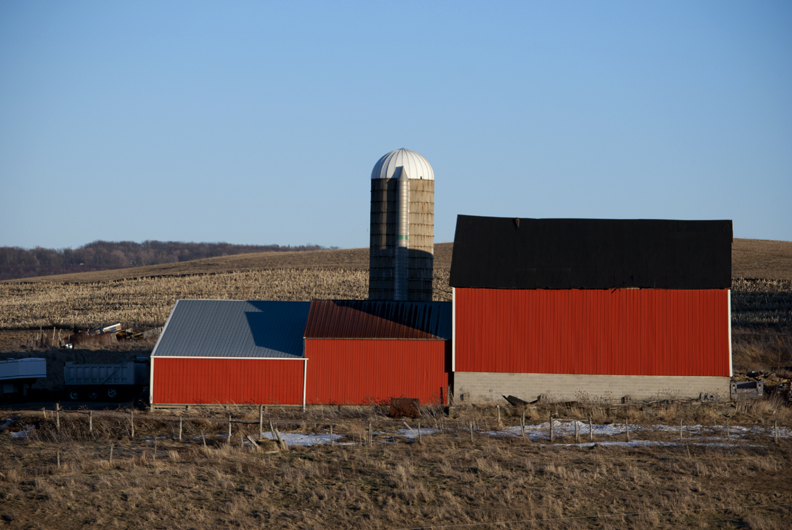
Red Barn
Nikon D60 w/ Nikkor 55-300mm f/4.5-5.6 lens
120mm, 1/500 sec, f/8, ISO 160 Auto exposure


Purple House, Green Shutters
Nikon D60 w/ Nikkor 10-24mm f/3.5-4.5 lens
14mm, 1/125 sec, f/8, ISO 400 Manual exposure 


Playground Primaries
Nikon D60 w/ Nikkor 10-24mm f/3.5-4.5 lens
10mm, 1/160 sec, f/7.1, ISO 400 Manual exposure


Power Tower
Nikon D60 w/ Nikkor 10-24mm f/3.5-4.5 lens
10mm, 1/320 sec, f/9, ISO 100 Auto exposure


Chain
Nikon D60 w/ Nikkor 18-55mm f/3.5-5.6 lens
55mm, 1/30 sec, f/5.6, ISO 400 Manual exposure

Flowers

Lily, Maroon and Yellow 
Nikon D60 w/Micro Nikkor 105 f/2.8  Lens
105mm, 1/125 sec, f/8, ISO 400 Manual Exposure


Legacy Iris
These Irises have been in my family since 1922
Nikon D60 w/Micro Nikkor 105 f/2.8  Lens
105mm, 1/30 sec, f/11, ISO 400 Manual Exposure


Peony with bee and ant
Nikon D60 w/Micro Nikkor 105 f/2.8  Lens
105mm, 1/125 sec, f/16, ISO 400 Manual Exposure


Yellow Tulips
Nikon D60 w/ Micro Nikkor 105mm f/2.8 lens
105mm, 1/250 sec, f/4, ISO 200 Auto exposure


Rose in February
Nikon D60 w/Micro Nikkor 105 f/2.8  Lens
105mm, 1/250 sec, f/11, ISO 400 Manual Exposure


Red Poinsettia
Nikon D60 w/Micro Nikkor 105 f/2.8  Lens
105mm, 1/4 sec, f/16, ISO 400 Manual Exposure


Point of View

The Angel of Sykesville
Nikon D60 w/Nikkor 10-24mm f/3.5-4.5 Lens
15mm, 1/160 sec, f/8, ISO 400 Manual Exposure


Peddler's Row
Nikon D60 w/Nikkor 10-24mm f/3.5-4.5 Lens
22mm, 1/125 sec, f/5.6, ISO 160 Auto Exposure


Precious
Nikon D60 w/Nikkor 10-24mm f/3.5-4.5 Lens
13mm, 1/30 sec, f/4, ISO 320 Auto Exposure


Great Hall, Carroll Commmunity College
Nikon D60 w/Nikkor 10-24mm f/3.5-4.5 Lens
10mm, 1/30 sec, f/3.5, ISO 1400 Auto Exposure


Power, Sky, Sun 
Nikon D60 w/Nikkor 10-24mm f/3.5-4.5 Lens
10mm, 1/250 sec, f/8, ISO 100 Manual Exposure


Blue Caboose
Nikon D60 w/Nikkor 10-24mm f/3.5-4.5 Lens
10mm, 1/125 sec, f/5.6, ISO 160 Auto Exposure


Grain Elevators
Nikon D60 w/Nikkor 10-24mm f/3.5-4.5 Lens
10mm, 1/125 sec, f/5.6, ISO 400 Manual Exposure


Grain Elevators and Hawk
Nikon D60 w/Nikkor 10-24mm f/3.5-4.5 Lens
10mm, 1/80 sec, f/5.6, ISO 400 Manual Exposure

Tuesday, June 14, 2011

Light and Shadow

Birch Bark
Nikon D60 w/ Nikon 55-300mm f/4.5-5.6 lens
220mm, 1/125 sec, f/16.0, ISO 400 manual exposure


Ridge Road
Nikon D60 w/ Nikon 55-300mm f/4.5-5.6 lens
98mm, 1/100 sec, f/16.0, ISO 400 manual exposure


Light and Shadow
Nikon D60 w/ Nikon 55-300mm f/4.5-5.6 lens
180mm, 1/1250 sec, f/5.3, ISO 200 Auto exposure


Front Porch
Nikon D60 w/ Nikon 18-55mm f/3.5-5.6 lens
29mm, 1/320 sec, f/9.0, ISO 100 auto exposure


Mulberry Tree
Nikon D60 w/ Nikon 18-55mm f/3.5-5.6 lens
28mm, 1/500 sec, f/11.0, ISO 100 manual exposure


Second Chance Farm
Nikon D60 w/ Nikon 55-300mm f/4.5-5.6 lens
140mm, 1/1600 sec, f/5.0, ISO 200 Auto exposure


Cupola
Nikon D60 w/ Nikon 55-300mm f/4.5-5.6 lens
185mm, 1/3200 sec, f/7.1, ISO 400 Auto exposure


Dormers on Slate
Nikon D60 w/ Nikon 55-300mm f/4.5-5.6 lens
120mm, 1/320 sec, f/8.0, ISO 100 manual exposure


Water Meter
Nikon D60 w/ Nikon 18-55mm f/3.5-5.6 lens
45mm, 1/125 sec, f/5.6, ISO 100 Auto exposure

Self-portraits

Nikon D60 w/ Nikon 18-55mm f/3.5-5.6 lens
32mm, 1/4 sec f/4.8, ISO 100 manual exposure


Nikon D60 w/ Nikon 18-55mm f/3.5-5.6 lens
32mm, 1/80 sec f/4.8, ISO 400 manual exposure
 
Nikon D60 w/ Nikkor 20mm f/2.8 lens
20mm, 1/5 sec f/8, ISO 400 manual exposure


Nikon D60 w/ Nikon 18-55mm f/3.5-5.6 lens
55mm, 1/30 sec f/5.6, ISO 400 manual exposure


Nikon D60 w/ Nikon 18-55mm f/3.5-5.6 lens
55mm, 1/15 sec f/5.6, ISO 400 auto exposure


Nikon D60 w/ Nikon 18-55mm f/3.5-5.6 lens
50mm, 1/10 sec f/5.6, ISO 400 manual exposure

Sunday, February 27, 2011

Tribute to Kodachrome


Kodachrome
1935-2009


                                    Kodachrome
                                    You give us those nice bright colors
                                    You give us the greens of summers
                                     Makes you think all the world's a sunny day, oh yeah!
                                     I got a Nikon camera
                                     I love to take a photograph
                                     So Mama, don't take my Kodachrome away

                                   —Paul Simon, 1973


Promised Land
Eric Meola


Pilot on Wing of F-18
The Kodachrome Project


Carrier Night Landing Trails
The Kodachrome Project


Afghan Girl
Steve McCurry


Still from the Zapruder Film
Abraham Zapruder


Polar Bear
Curtis Arthur


Kodachrome Basin State Park, Utah
Geoffrey Coleman


Badlands
The Kodachrome Project


Times Square
The Kodachrome Project


Red Chairs
The Kodachrome Project


Grand Canyon
Eric Meola


Corn Islands, Nicaragua
Peter Guttman


Penguins
Peter Guttman


Wigwam Motel, Rt. 66
Peter Guttman